An introduction to
Sacred Geometry
The study of pattern, proportion, and the mathematics of meaning.

The study of pattern, proportion, and the mathematics of meaning.
Long before geometry was written down, humans recognised patterns that repeated themselves in nature: spirals in shells, symmetry in leaves, branching in rivers and lungs, circles in the stars and seasons.
These recurring forms sparked a question:
Why does the world organise itself this way?
Sacred geometry examines shapes and proportions that societies across history associated with creation, harmony, and the structure of reality. It bridges observation and symbolism — mathematics used not only to measure the world, but to interpret it.


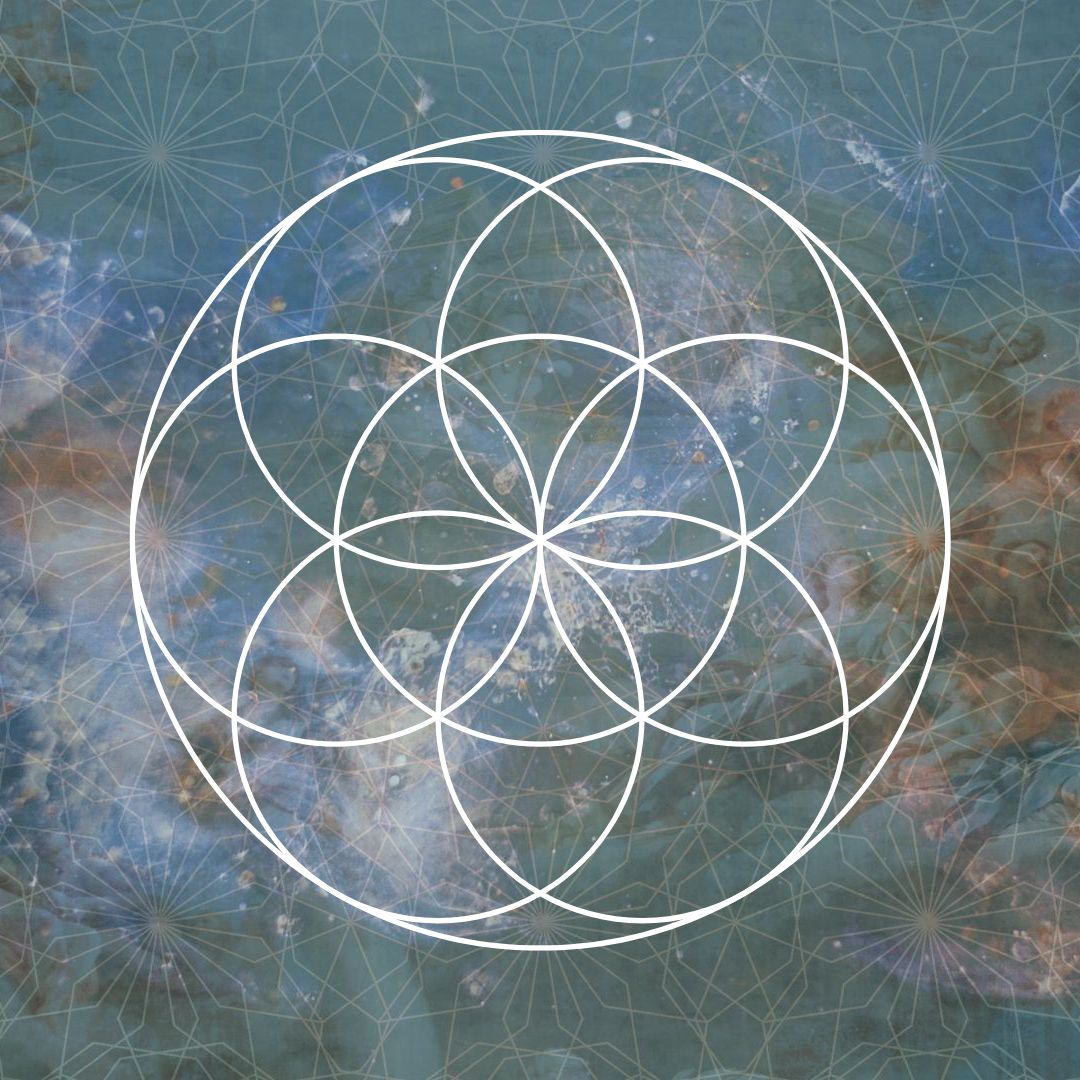


Geometry as a sacred language developed in early civilizations where architecture, astronomy, and spirituality were interwoven:
• Egypt – pyramids aligned to stars and cardinal points
• Mesopotamia – ziggurats mapping divine order on earth
• Greece – Pythagorean philosophy linking number and cosmos
• Islamic culture – intricate geometric art avoiding figurative imagery
• Hindu & Buddhist traditions – mandalas as meditation on the cosmos
In each case, geometry provided a way to express cosmic order through human hands.
Certain forms became symbolic touchstones of harmony:
• The Circle – unity, continuity, the infinite
• The Square – matter, stability, grounded structure
• The Triangle – relationship, transformation, ascent
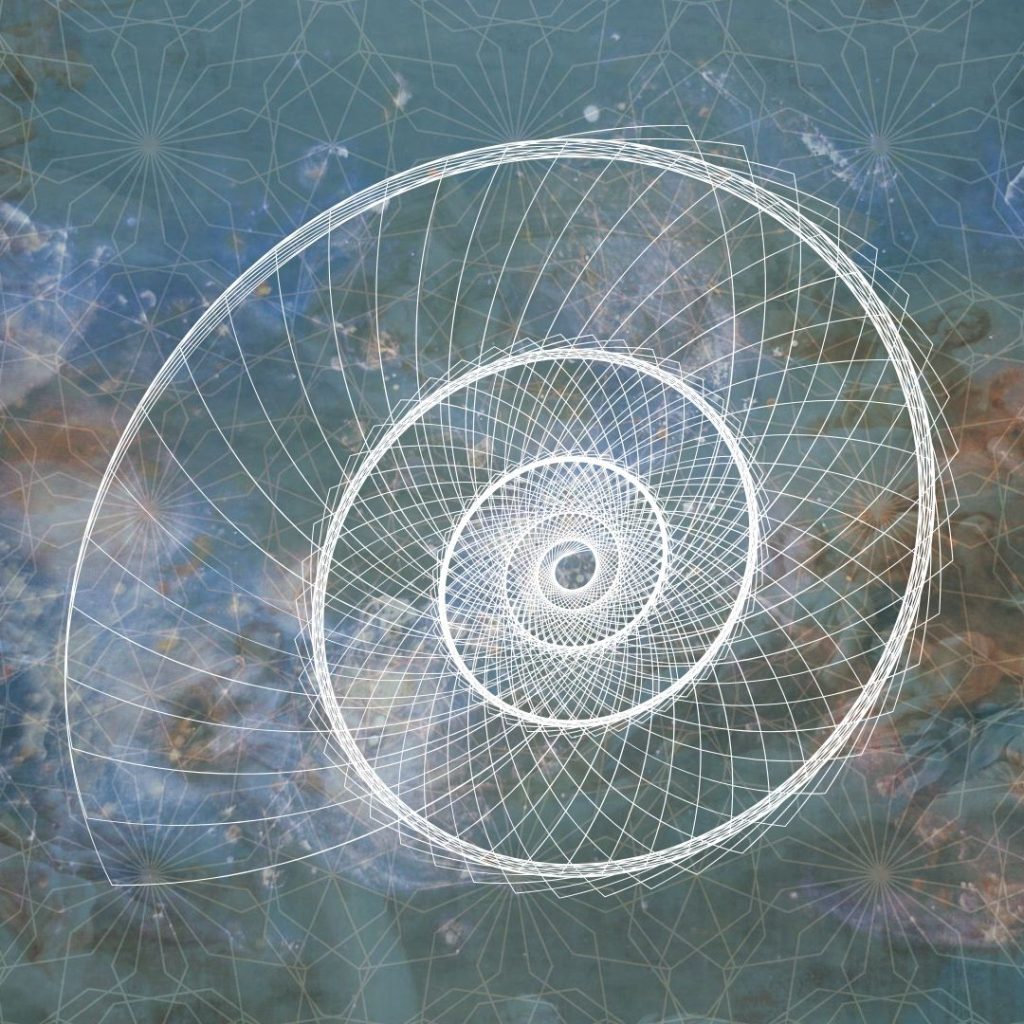
• The Spiral – growth, cycles, evolving motion
• The Golden Ratio – proportion found in bodies, shells, galaxies
• Platonic Solids – archetypal forms associated with classical elements
These shapes do not possess power on their own.
Humans gave them power through interpretation —
a shared language of meaning encoded in form.
Sacred geometry has been used to:
• design temples, gardens, and cities
• create ritual and contemplative art
• explore the relationship between numbers and nature
• teach philosophical and metaphysical ideas
It served as both blueprint and metaphor:
revealing how the seemingly chaotic world holds coherence.
Today, sacred geometry is explored in many fields:
• Architecture – biophilic design and pattern logic
• Physics & cosmology – symmetry and the structure of space
• Art and design – mandalas, tessellations, sacred forms
• Meditation and mindfulness – using shape to train awareness
Some approach it spiritually. Others mathematically.
Both are valid pathways into the same mystery.
A grounded perspective
Sacred geometry is not a secret code to solve the universe.
It is a lens through which humans have expressed awe, order, and relationship for thousands of years.
Patterns help us remember
that chaos and beauty are not opposites.
A concise definition
Sacred geometry: the exploration of meaningful patterns in form — where mathematics becomes a way to understand our place in the world.